
Chapter 1: Fake Reality
Political Manipulation & Conflict
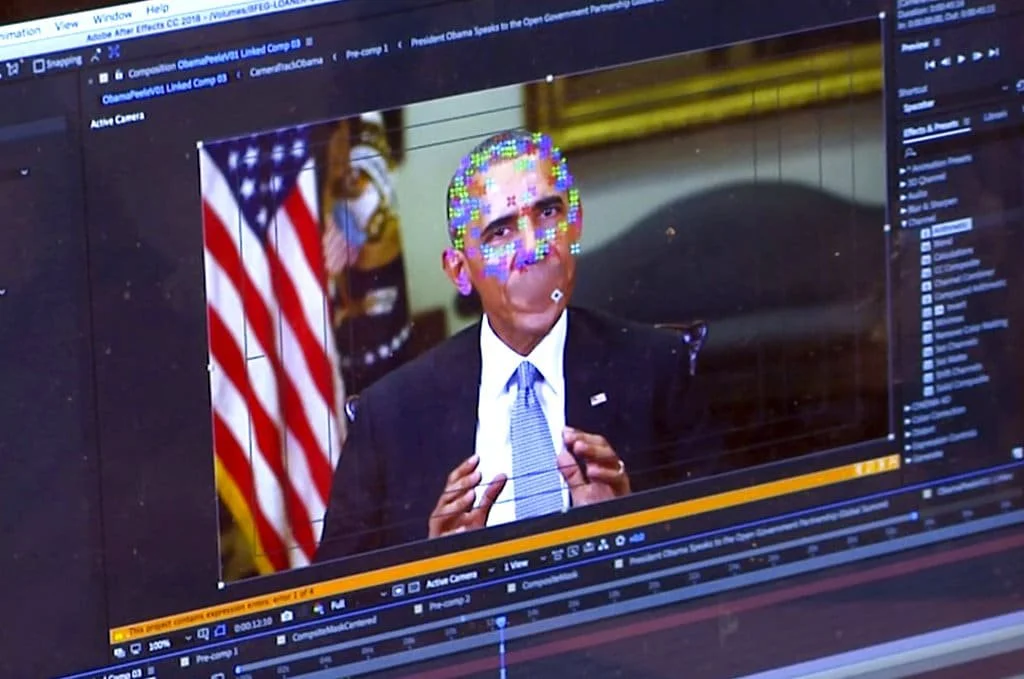
AI deepfakes have raised concerns about their potential to influence political processes and social stability.
Because generated videos and audio can make public figures appear to say or do things that never happened, they can be used to spread false political messages, damage reputations, or manipulate voters during election campaigns.
Researchers warn that deepfakes may also be deployed as tools of psychological or information warfare, where fabricated media are used to provoke fear, confusion, or civil unrest. Beyond direct deception, another major risk is that the existence of deepfakes allows real evidence to be dismissed as fake, which can weaken accountability and erode public trust in democratic institutions and media
Case Study #1. 2022 Russian Invasion of Ukrainian
A widely discussed example occurred during the 2022 Russian invasion of Ukraine, when a manipulated video appeared online that seemed to show Ukrainian President Volodymyr Zelenskyy urging Ukrainian soldiers to surrender. The video circulated briefly on social media and a hacked news website before it was quickly identified as a deepfake and removed.
Although the clip was not highly convincing, researchers note that the incident demonstrated how synthetic media could be used during conflicts to spread disinformation, undermine morale, and destabilize public communication during wartime. The case is often cited as an early example of deepfakes being used in the context of geopolitical conflict and information warfare

2.Financial Fraud & Scams
Deepfakes are increasingly being used in financial scams and fraud schemes, where AI-generated audio, video, or images impersonate trusted individuals to deceive victims. Criminals can use voice cloning or synthetic video to imitate company executives, financial advisors, or family members in order to request money transfers or sensitive information.
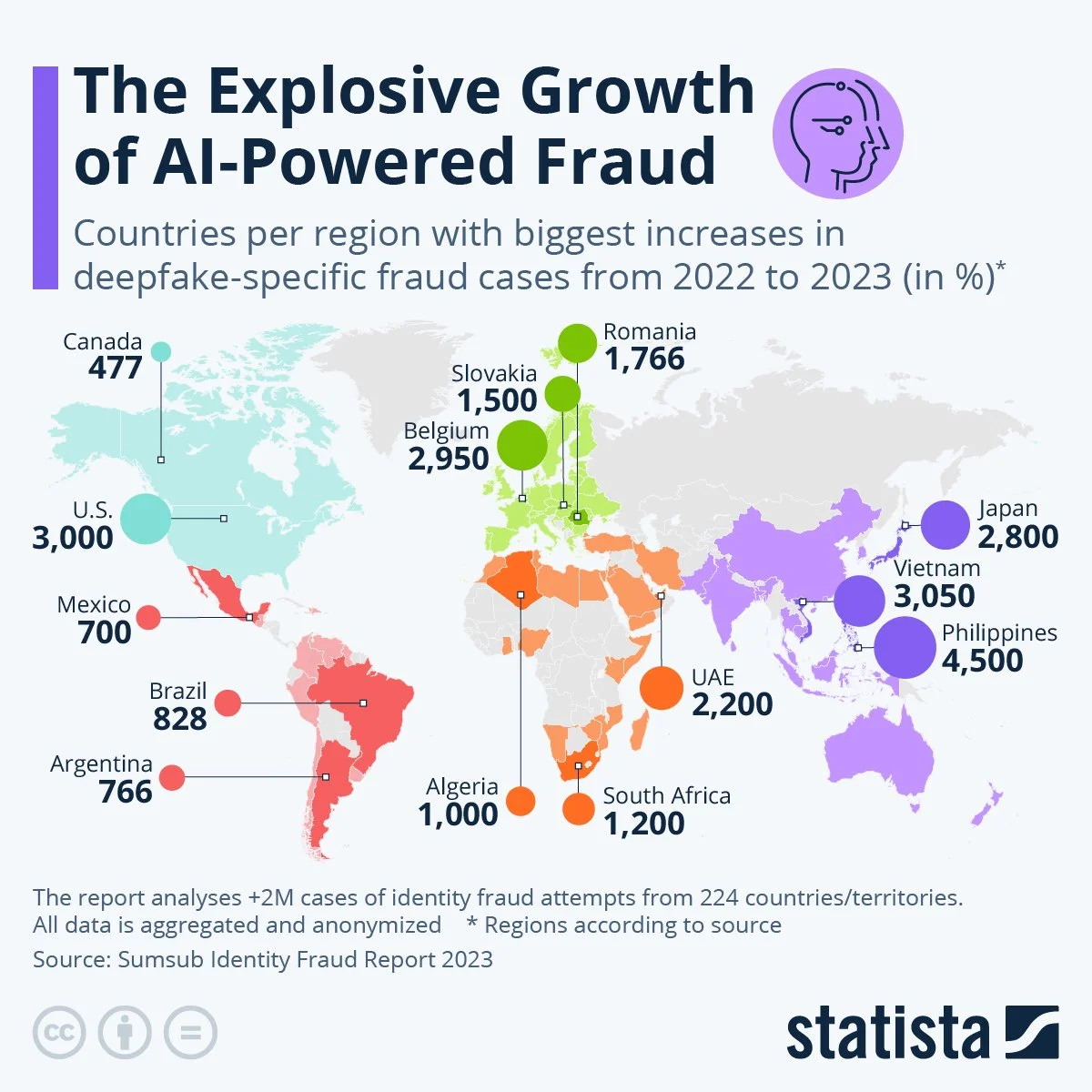
Reported cases of financial scams using AI have increased dramatically, with over 50% of fraud attempts . In 2024, consumers reported over$12.5 billion in losses to fraud, a 25% increase from the previous year, with AI accelerating the efficiency of these scams.
Because these media can appear highly realistic, victims may believe they are interacting with a legitimate person, which increases the effectiveness of the fraud.
Researchers and cybersecurity agencies warn that these technologies are expanding the scale and sophistication of financial crime, particularly in business email compromise schemes and social engineering attacks that rely on impersonation and trust
Case Study #2. 2024 Hong Kong Fraud

A recent example occurred in 2024, when a multinational company in Hong Kong was defrauded of about $25 millionafter scammers used deepfake video and audio to impersonate senior executives during a video conference call. An employee initially suspected the request was a phishing attempt, but during the call the attackers appeared as realistic digital versions of the company’s chief financial officer and other staff members, convincing the employee to authorize multiple transfers to fraudulent accounts.
Investigators later confirmed that the meeting participants were AI-generated deepfakes. The case illustrates how rapidly improving synthetic media tools are enabling more convincing and large-scale financial scams
AI Impact Diagram
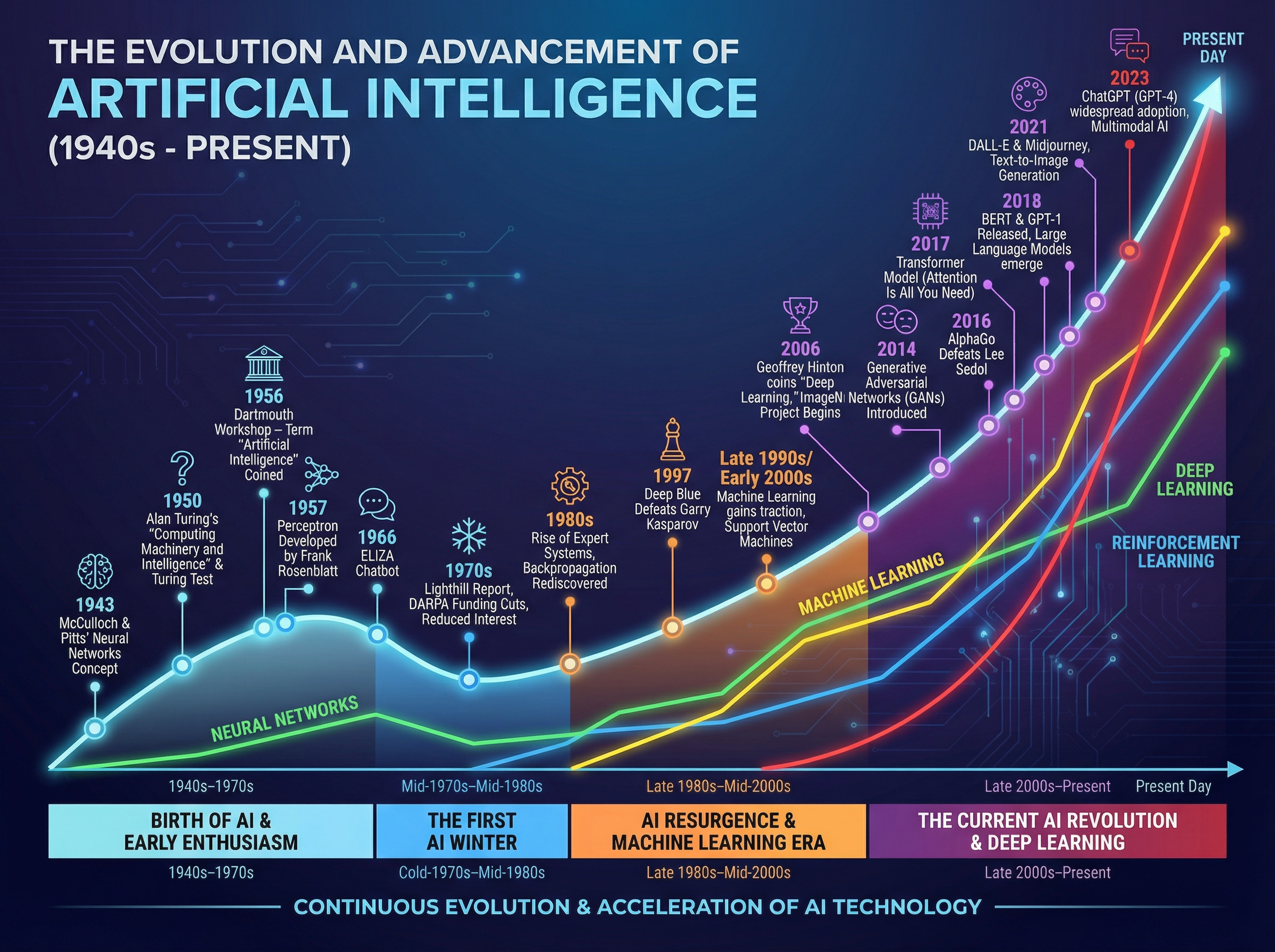
In this activity, students will explore how AI deepfakes may shape society in the future by examining the trajectory of recent AI development. Over the past decade, advances in machine learning, generative models, and computing power have made it increasingly easy to create realistic synthetic images, video, and audio. Tools that once required specialized technical knowledge are now accessible to the public through online platforms and consumer software. Because of this rapid progress, researchers often analyze technological trends to anticipate future risks and opportunities.
As a reference point, students examine forecasts from the research project AI 2027, which explores potential near-term developments in artificial intelligence and how they might influence society.
In this exercise, students will map the growth of generative AI capabilities over time and use that trajectory to predict possible social impacts of deepfakes in areas such as politics, media, security, and everyday communication.